

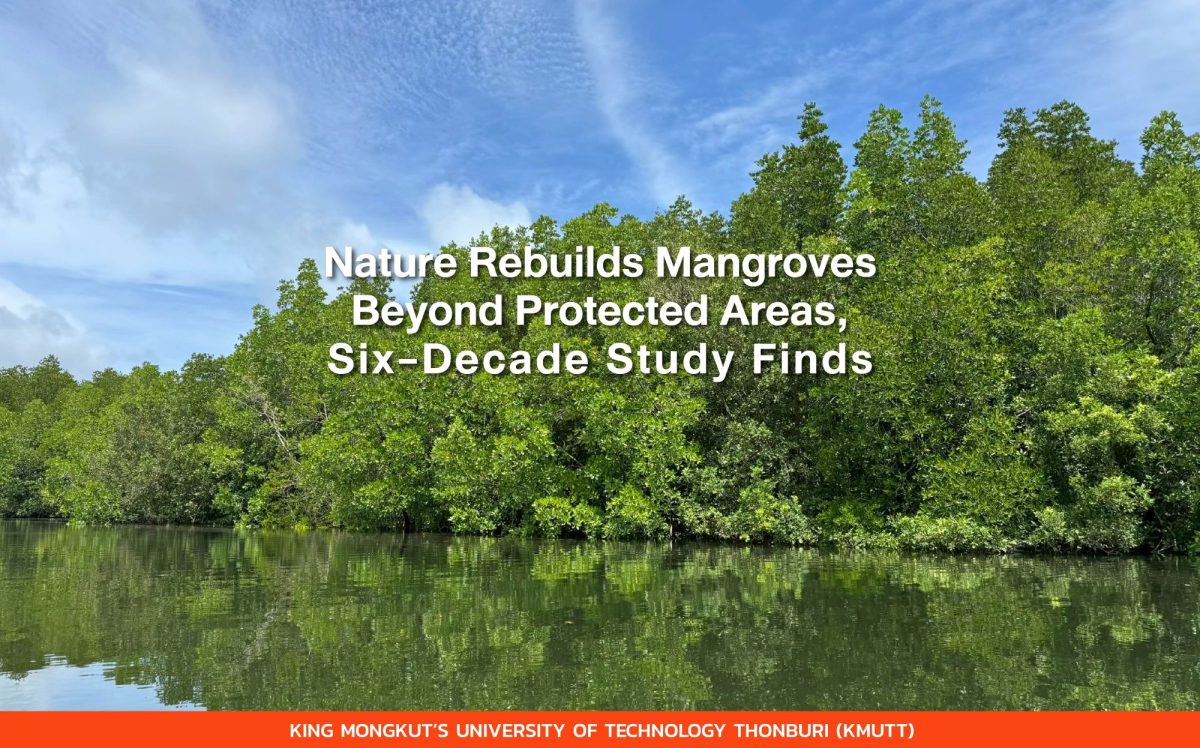
Nature Rebuilds Mangroves Beyond Protected Areas, Six-Decade Study Finds
A study spanning nearly six decades shows that naturally regenerated mangroves can regain levels of biodiversity similar to those of natural forests, while surviving mature trees act as “biological legacies” that help rebuild ecological complexity.
Bangkok, Thailand – Mangrove restoration is often associated with planting seedlings. However, a long-term study in the Khura Buri district and parts of the Takua Pa district in Phang Nga Province, southern Thailand, shows that nature itself can play a leading role in restoring mangrove forests. Researchers found that naturally regenerated mangroves had a diversity of tree species similar to that of natural forests. Large, mature trees that survived earlier disturbances also made an outsized contribution to forest structure and ecological complexity. One particularly striking phenomenon was identified by the researchers as the “Xylocarpus Paradox.”
The study, titled “Multidecadal landscape evolution and natural recovery of mangroves beyond protected areas,” was published in Communications Earth & Environment, a Nature Portfolio journal. The study was led by Asst. Prof. Dr. Uday Pimple of the Joint Graduate School of Energy and Environment (JGSEE), King Mongkut’s University of Technology Thonburi (KMUTT), Thailand, in collaboration with an international research team.
Nearly six decades of change
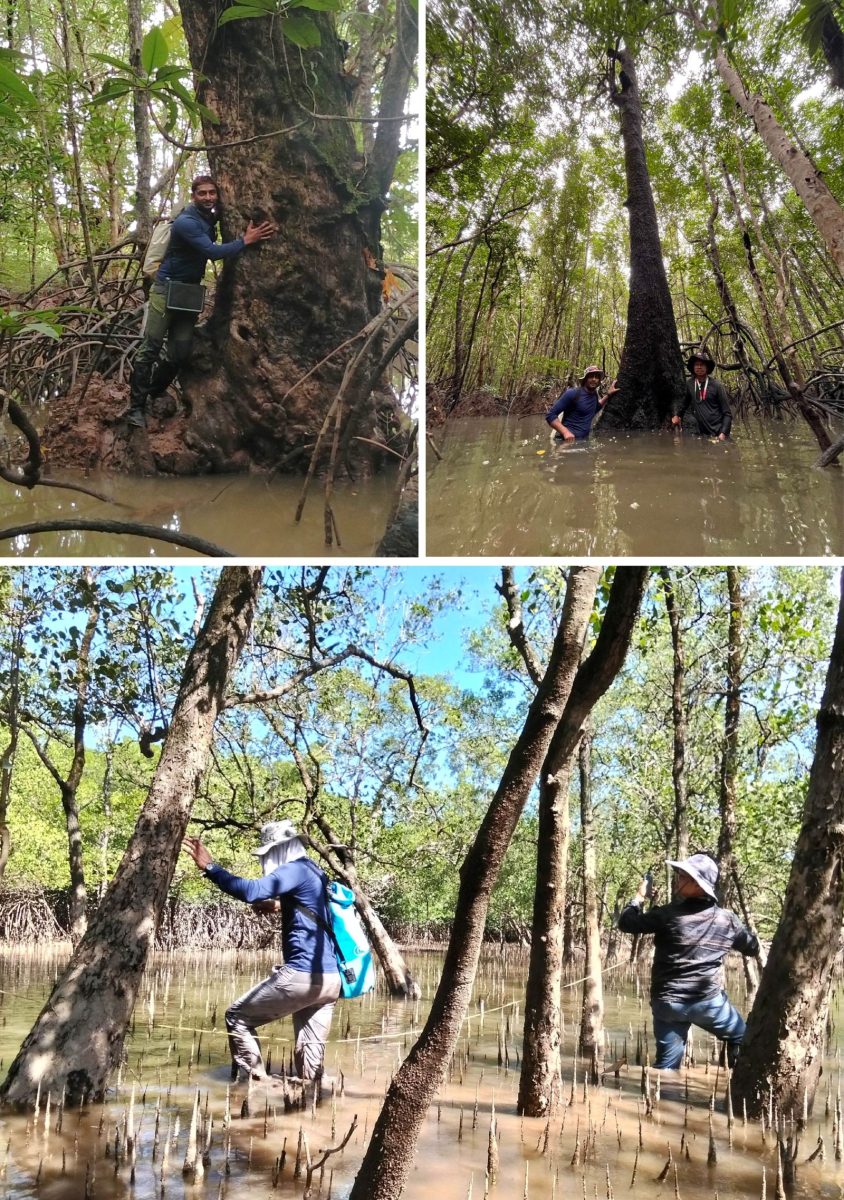
The researchers traced how the mangrove landscape in the Khura Buri district and parts of Takua Pa district changed from 1966 to 2025. Because the landscape lies outside a formally designated protected area, it offers an important opportunity to examine whether mangroves can recover naturally and maintain biodiversity without conventional protected-area status. To understand how the mangroves had changed, the researchers combined old aerial photographs and satellite images with extensive fieldwork, including measurements of more than 4,400 trees. The results revealed a story of both loss and recovery. Although the landscape has lost nearly 900 hectares of mangroves since 1966, the study identified 2,917 hectares of mangrove gain between 1987 and 2025. More than 90% of this recovery happened naturally, with only a relatively small area restored through planting. This shows that, even though the area is not formally protected, if suitable conditions remain and human pressures are reduced, mangrove forests can recover largely on their own. Actively rehabilitated stands, which were largely dominated by Rhizophora species, differed significantly in diversity from both natural and naturally regenerated forests. These results suggest that restoration success should not be measured only by the number of planted trees that survive. Species diversity, community composition and forest structure are also essential indicators of whether a recovering forest is developing the ecological characteristics of a natural ecosystem. Planting remains valuable where natural recovery is limited. However, the findings show that protecting suitable conditions for natural regeneration can allow more diverse and structurally complex forests to develop.
The “Xylocarpus Paradox”
One of the study’s most notable findings concerns Xylocarpus granatum, a mangrove tree species known for producing large, mature individuals. Although only about one in ten recorded trees was X. granatum, the species accounted for more than one-quarter of the forest’s total tree-trunk area, approximately 26 % of the total basal area. In other words, a relatively small number of these trees made a disproportionately large contribution to the physical structure of the forest. The researchers described this pattern as the “Xylocarpus Paradox.” Many of the large X. granatum trees appear to have survived from earlier generations of the forest. They may therefore function as “biological legacies,” living remnants that persist after disturbance and continue to influence forest recovery for decades. Large X. granatum individuals were associated with structurally complex, mixed-species communities. Communities in which the species occurred alongside rarer tree species also showed high levels of species richness and diversity. The finding carries an important conservation message: ecological importance cannot be determined simply by counting stems. A small number of large, mature trees can support forest structure, habitat complexity and long-term ecosystem recovery far beyond what their abundance might suggest.
Conservation value beyond protected areas
The study provides evidence that mangrove landscapes outside formally protected areas can maintain biodiversity, recover naturally and develop structurally complex forests over long periods. Natural regeneration, surviving mature trees, historical regulations, reduced human pressures and local stewardship may all have contributed to the ecological continuity observed in Khura Buri district and parts of Takua Pa district. The findings also highlight the conservation value of areas that already function as de facto conservation landscapes, even when they are not formally designated as protected areas. This evidence could support the evaluation of the study area and similar mangrove landscapes as potential Other Effective Area-based Conservation Measures (OECMs). These are geographically defined areas outside conventional protected-area systems that nevertheless achieve effective and lasting conservation of biodiversity. Recognising such landscapes could help Thailand and other countries expand biodiversity conservation beyond existing protected-area networks while acknowledging the contributions of local stewardship and natural ecological processes.
Research team:
Additional authors include:
- Dario Simonetti, GIS and Remote Sensing Consultant, Varese, Italy
- Sumet Thongdon-um, Department of Marine and Coastal Resources, Bangkok, Thailand
- Ruth Phatanacharoen, College of Engineering and Technology, Dhurakij Pundit University, Bangkok, Thailand
- Asamaporn Sitthi, Department of Geography, Faculty of Social Science, Srinakharinwirot University, Bangkok, Thailand
- Valéry Gond, CIRAD, UPR Forests and Societies (F&S), Montpellier, France
- Daniel A. Friess, Department of Earth and Environmental Sciences, Tulane University, New Orleans, USA
- Poonsri Wanthongchai, Department of Marine and Coastal Resources, Bangkok, Thailand
- Uta Berger, Institute of Forest Growth and Computer Sciences, Technische Universität Dresden, Dresden, Germany
This research was funded by the Southeast Asia-Europe Joint Funding Scheme for Research and Innovation through the project “Monitoring and optimization of mangrove restoration for sustainable management of coastal ecosystems in Southeast Asia (2023–2026)”, with support from the National Science, Research and Innovation Fund (NSRF) via the Program Management Unit for Human Resources & Institutional Development, Research and Innovation (PMU-B), Thailand (Grant No. B48G660110), and the German Federal Ministry of Education and Research (BMBF), Germany (Grant No. 01DP23002).
Pimple, U., Simonetti, D., Thongdon-um, S. et al. Multidecadal landscape evolution and natural recovery of mangroves beyond protected areas. Commun Earth Environ (2026). https://doi.org/10.1038/s43247-026-03921-1
News article prepared by:
Partnership Relations and Outreach, JGSEE, KMUTT, Thailand, in collaboration with CIRAD, France.
Editorial team:
- Assoc. Prof. Dr. Sebastien Bonnet, JGSEE, KMUTT, Thailand
- Ms. Kulakarn Soontornwat, JGSEE, KMUTT, Thailand
- Ms. Jelena Kuhn, CIRAD, France